How IVF Can Help You Become a Parent
Infertility is an incredibly emotional journey for many couples, and one of the most common conditions that contribute to infertility in women is endometriosis. If you’re struggling to conceive and have been diagnosed with endometriosis, you’re not alone. Many women with this condition face difficulty in becoming pregnant, but the good news is that with advancements in reproductive medicine, IVF (In Vitro Fertilization) offers a promising solution to help women with endometriosis build their families.
As an experienced IVF specialist in PCMC, I’ll also guide you through the IVF process and how it can be tailored to meet the needs of women with endometriosis.
Understanding Endometriosis and Its Impact on Fertility
Endometriosis is a condition where the tissue that normally lines the inside of your uterus (the endometrium) starts growing outside the uterus. This can affect the ovaries, fallopian tubes, and other parts of the pelvic area. It can lead to inflammation, scarring, and adhesions that interfere with the reproductive system’s ability to function normally. The main symptoms of endometriosis include:
- Painful periods: Intense menstrual cramps and pain that doesn’t go away with over-the-counter pain relievers.
- Pain during intercourse: Pain during or after sex is a common issue for women with endometriosis.
- Pain during bowel movements or urination: This often occurs during menstruation and can be very uncomfortable.
- Heavy menstrual bleeding: This can result in anemia and further complications.
- Difficulty getting pregnant: The most significant issue for women with endometriosis is infertility.
While endometriosis doesn’t always lead to infertility, it can significantly reduce a woman’s chances of becoming pregnant. The condition can cause blocked fallopian tubes, disrupted implantation, and lower egg quality, all of which make conception more difficult. That’s where IVF treatment in PCMC comes in as an effective solution.
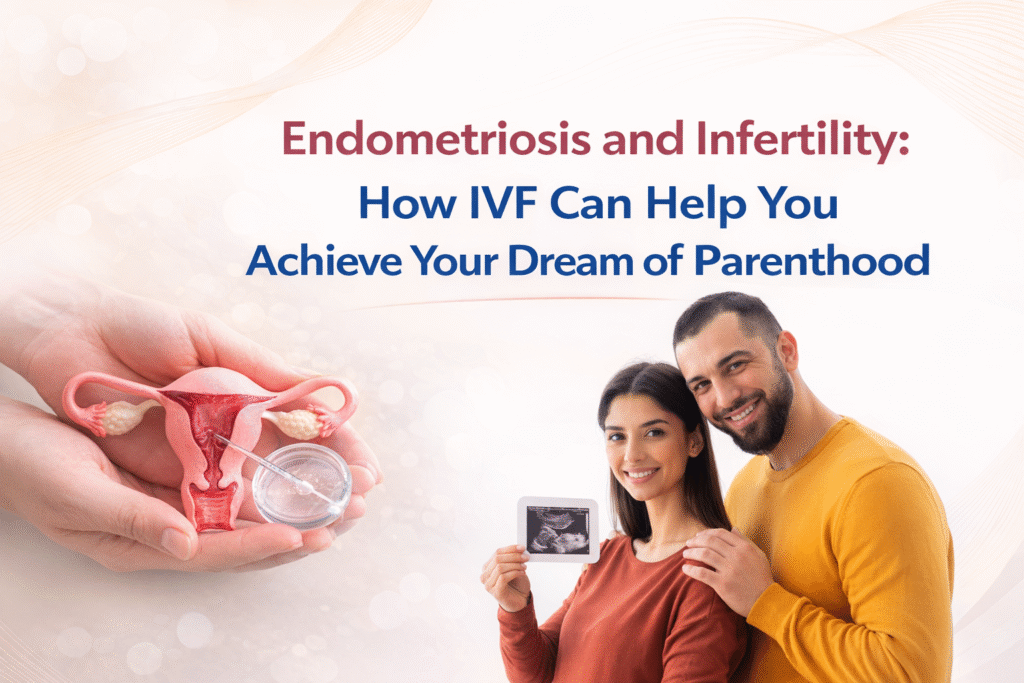
How IVF Helps Women with Endometriosis
IVF, or In Vitro Fertilization, is a fertility treatment that involves stimulating the ovaries to produce multiple eggs, retrieving the eggs, fertilizing them outside the body, and then implanting the fertilized embryos back into the uterus. IVF can help bypass many of the fertility obstacles that women with endometriosis face. Here’s how IVF can assist:
1. Bypassing Blocked Fallopian Tubes
Endometriosis can lead to the formation of scar tissue that can block or damage the fallopian tubes. Since the fallopian tubes are responsible for carrying the eggs from the ovaries to the uterus, this blockage can prevent fertilization. IVF bypasses the fallopian tubes entirely, allowing the eggs to be retrieved directly from the ovaries and fertilized in a laboratory setting.
2. Improving Egg Quality and Quantity
Women with endometriosis often experience a reduced ovarian reserve, meaning they have fewer eggs available for fertilization. IVF allows for controlled ovarian stimulation to produce multiple eggs, which can then be fertilized and assessed for quality. In some cases, additional procedures like egg donation may be considered if ovarian reserve is too low.
3. Overcoming Implantation Issues
Endometriosis can affect the lining of the uterus, making it less receptive to an embryo. IVF can help in this case by using advanced techniques to prepare the uterine lining for implantation. Additionally, doctors can perform genetic testing on the embryos to ensure the best chance of implantation and pregnancy.
4. Using Advanced Techniques like ICSI and Genetic Testing
If you have endometriosis, you may benefit from techniques like ICSI (Intracytoplasmic Sperm Injection), where a single sperm is injected directly into an egg to aid fertilization. This is especially helpful if there are concerns about sperm quality or if there is damage to the eggs or sperm due to endometriosis. Preimplantation genetic testing (PGT) can also be used to identify the healthiest embryos, reducing the risk of miscarriage and improving the chances of a successful pregnancy.
The IVF Treatment Process for Women with Endometriosis
If you’re considering IVF treatment, it’s essential to understand the process and how it can be customized to meet your needs. Here’s a breakdown of the typical IVF process:
1. Ovarian Stimulation
The first step of IVF is ovarian stimulation, where fertility medications are given to stimulate the ovaries to produce multiple eggs. This is crucial for women with endometriosis because their ovaries may not respond well to natural stimulation.
2. Monitoring and Egg Retrieval
During the stimulation phase, frequent visits to the clinic will be necessary to monitor how your ovaries are responding. Once the eggs are mature, they are retrieved through a minor surgical procedure performed under sedation. The eggs are then placed in a special laboratory for fertilization.
3. Fertilization and Embryo Culture
The retrieved eggs are fertilized with sperm in the laboratory. Depending on the specific circumstances, ICSI may be recommended to ensure successful fertilization. The embryos are cultured for a few days, and doctors will assess their quality to determine which embryos are the best candidates for implantation.
4. Embryo Transfer
Once the embryos are ready, the best quality embryo is selected and transferred into the uterus. The transfer is a simple, non-invasive procedure that doesn’t require anesthesia. In some cases, multiple embryos may be transferred to increase the chances of pregnancy.
5. Pregnancy Test and Follow-Up
About 10 to 14 days after the embryo transfer, you will undergo a blood test to check for pregnancy. If the test is positive, you will continue to be monitored with ultrasounds and blood tests to ensure the pregnancy is progressing well.
Why IVF is a Promising Solution for Women with Endometriosis
While endometriosis can be a challenging condition to navigate, IVF offers hope for many women who struggle with infertility. With the right treatment plan, including IVF, women with endometriosis can increase their chances of becoming pregnant and achieving their dreams of parenthood.
Book Your Consultation with an IVF Specialist in PCMC
If you have endometriosis and are struggling with infertility, IVF may be the solution you need. As an experienced IVF Specialist in PCMC, Dr. Rajendra Shitole provides personalized care to women with endometriosis and other fertility issues. With a comprehensive approach to diagnosis and treatment, Dr. Shitole is dedicated to helping you navigate the IVF process and achieve a successful pregnancy.
Book Your Consultation Today! Take the first step toward your fertility journey by scheduling an appointment with Dr. Rajendra Shitole, your trusted IVF specialist in PCMC. Together, we can explore your options and find the best treatment plan to help you become a parent.

Dr. Rajendra Shitole
Dr. Rajendra Shitole, Best IVF & Fertility Specialist Centre in PCMC . is a highly skilled Gynaecologist, Fertility Consultant, and Laparoscopic & Robotic Surgeon with over 11 years of experience dedicated to women’s health and reproductive care. His mission is to help childless couples fulfill their dream of parenthood through compassionate care and advanced medical expertise.
He has successfully managed numerous complex cases of Infertility, Fibroids, PCOS, Adenomyosis, Endometriosis, and Male Factor Infertility.