🌟 Introduction: Understanding Male Infertility
Male infertility is a growing global concern, affecting nearly 40–50% of couples struggling to conceive. It occurs when a man’s reproductive system is unable to fertilize a healthy egg, either due to low sperm production, poor sperm function, hormonal imbalance, genetic factors, or blockages that prevent sperm release. Despite being common, male infertility often goes undiagnosed because many men show no visible symptoms.
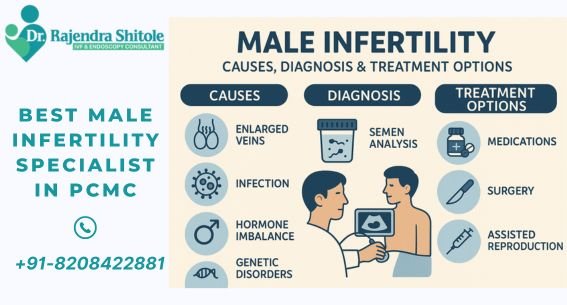
With advancements in reproductive medicine, men now have access to precise diagnosis, targeted treatment, and successful fertility solutions. At the Best Male Infertility Centre in PCMC, Dr. Rajendra Shitole provides specialized care using modern andrology techniques, advanced fertility diagnostics, and scientifically proven treatment options.
This pillar page explores everything you need to know—causes, early signs, diagnosis, treatments, and success factors—supported by cluster topics for deeper understanding.
⭐ What Is Male Infertility?
Male infertility refers to the inability of a man to contribute to pregnancy despite regular unprotected intercourse for at least one year. It can arise from issues related to:
- Sperm count (quantity)
- Sperm motility (movement)
- Sperm morphology (shape)
- Hormone levels
- Genetic abnormalities
- Obstruction in reproductive tract
A normal sperm count ranges 15 million per ml or above, and healthy sperm must move efficiently and be well-formed to fertilize an egg.
⭐ Symptoms of Male Infertility
Male infertility usually does not present obvious symptoms. However, some men may experience:
- Problems with ejaculation (low volume, no ejaculation, painful ejaculation)
- Decreased sexual desire or erectile dysfunction
- Swelling or pain in the testicles
- Reduced facial/body hair (indicating hormonal imbalance)
- Difficulty achieving or maintaining erection
- History of infections, surgeries, or trauma
If you notice any of these changes, it’s time to visit a Male Infertility Doctor in PCMC for early evaluation.
⭐ When Should You See a Male Infertility Specialist?
You should consult a specialist like Dr. Rajendra Shitole if:
- You and your partner have tried to conceive for 12 months without success
- You have a history of undescended testicles, mumps, or scrotal injury
- You experience low libido, erectile problems, or ejaculation issues
- Your semen analysis report is abnormal
- You have chronic medical conditions like diabetes, thyroid imbalance, or varicocele
- You are above 35 and planning for conception
Early diagnosis increases treatment success significantly, especially at the Best Male Infertility Clinic in PCMC.
⭐ Causes of Male Infertility
Male infertility can result from several medical, genetic, hormonal, lifestyle, and environmental factors.
1. Low Sperm Count (Oligospermia)
A common cause where semen contains fewer sperm than normal.
Reasons include:
- Hormonal imbalance
- Infections
- Varicocele
- Smoking and alcohol
- Heat exposure
- Obesity
2. Poor Sperm Motility (Asthenozoospermia)
Sperm must swim efficiently to reach the egg. Poor motility reduces this ability.
Causes include:
- Nutritional deficiencies
- Genetic issues
- Lifestyle habits
- Prolonged heat exposure
3. Abnormal Sperm Morphology (Teratozoospermia)
This refers to abnormally shaped sperm.
Causes include:
- Genetic abnormalities
- Exposure to toxins
- Infections
- Defective testicular development
4. Hormonal Imbalance
Hormones regulate sperm production. Low testosterone, high prolactin, thyroid issues, or pituitary disorders cause infertility.
5. Genetic Causes of Male Infertility
Genetic disorders may affect sperm quantity, quality, or production.
Common genetic conditions include:
- Klinefelter Syndrome
- Y-Chromosome Microdeletions
- CFTR gene mutations
6. Ejaculation & Sexual Dysfunction
- Retrograde ejaculation
- Erectile dysfunction
- Premature ejaculation
- Blockages in seminal tract
These conditions require evaluation by a Best Male Infertility Consultant in PCMC.
7. Varicocele
A varicocele is enlarged veins in the scrotum. It affects sperm production and quality. Surgical repair often improves fertility.
8. Infections (STD/UTI/Testicular infections)
Infections can obstruct sperm passage or reduce sperm health.
9. Lifestyle Factors
- Smoking
- Alcohol
- Drugs
- Lack of sleep
- Stress
- Poor diet
- Excessive gym steroids
⭐ How Male Infertility Is Diagnosed
Accurate diagnosis is essential for successful treatment. At the Best Male Infertility Centre in PCMC, evaluation includes:
1. Medical History & Clinical Examination
The doctor assesses:
- Past medical/surgical history
- Sexual function
- Hormonal issues
- Genetic risk factors
- Lifestyle habits
2. Semen Analysis (Most Important Test)
It measures:
- Sperm count
- Motility
- Morphology
- Semen volume
- pH
- Total motile count
Multiple samples improve accuracy.
3. Hormonal Testing
Tests include:
- Testosterone
- LH, FSH
- Prolactin
- Thyroid profile
4. Scrotal Ultrasound
Detects varicocele, cysts, blockages, or testicular abnormalities.
5. Genetic Testing
Recommended in:
- Azoospermia (no sperm)
- Very low sperm count
- Suspected chromosomal abnormality
6. Sperm DNA Fragmentation Test
Assesses sperm DNA quality — important for IVF success.
7. Post-Ejaculatory Urinalysis
Confirms retrograde ejaculation.
⭐ Male Infertility Treatment Options
1. Medical Treatments
Used for hormonal issues, infections, erectile dysfunction, or mild sperm defects.
Includes:
- Hormonal therapy
- Antibiotics
- Antioxidants
- Testosterone correction
- Erectile dysfunction medications
2. Lifestyle Modifications
Improves sperm quality naturally:
- Weight loss
- Avoiding smoking/alcohol
- Correcting sleep cycle
- Stress management
- Avoiding heat exposure
3. Surgical Treatments
- Varicocele Repair
- Sperm Retrieval Techniques
4. Assisted Reproductive Techniques (ART)
Used when natural conception is difficult.
IUI (Intrauterine Insemination)
Washed sperm are placed into the uterus.
IVF (In Vitro Fertilization)
Egg and sperm combined in a laboratory.
ICSI (Intracytoplasmic Sperm Injection)
A single healthy sperm is injected directly into an egg.
This is highly effective for low sperm count, poor morphology, and azoospermia.
5. Donor Sperm
Used only when no sperm is retrievable.
⭐ Success Rates of Male Infertility Treatment
Success depends on:
- Age
- Sperm quality
- Underlying disease
- Treatment approach
- Genetic factors
- Lifestyle
With proper diagnosis and treatment at the Best Male Infertility Centre in PCMC, pregnancy success rates are high—especially with ART like ICSI.
⭐ How to Improve Male Fertility Naturally
- Eat zinc-rich and antioxidant foods
- Reduce stress
- Avoid tight clothing
- Limit caffeine
- Stay hydrated
- Exercise regularly
- Avoid hot showers and saunas
⭐ FAQs on Male Infertility
1. Can male infertility be cured?
Yes—many cases are treatable with medicines, surgery, or ART.
2. What is the most common cause?
Low sperm count and varicocele.
3. Is IVF the only solution?
No—there are natural treatments, medicines, surgeries, and IUI/ICSI options.
4. How long does treatment take?
Depends on the cause; 3–6 months is common.
5. Does age affect male fertility?
Yes. After 40, sperm quality declines
Who is the Best Male Infertility Specialist in PCMC?
Dr. Rajendra Shitole is considered the Best Male Infertility Specialist in PCMC, with 11+ years of expertise in treating complex male infertility conditions using advanced diagnostic and treatment options.
⭐ Conclusion
Male infertility is treatable, manageable, and often reversible with the right intervention. With advanced andrology care from Dr. Rajendra Shitole – Best Male Infertility Specialist in PCMC, couples receive personalized evaluation, accurate diagnosis, and high-success fertility treatments.
Whether you are dealing with low sperm count, hormonal imbalance, genetic issues, or unexplained infertility, early medical guidance ensures better outcomes and faster conception.

Dr. Rajendra Shitole
Dr. Rajendra Shitole, Best IVF & Fertility Specialist Centre in PCMC . is a highly skilled Gynaecologist, Fertility Consultant, and Laparoscopic & Robotic Surgeon with over 11 years of experience dedicated to women’s health and reproductive care. His mission is to help childless couples fulfill their dream of parenthood through compassionate care and advanced medical expertise.
He has successfully managed numerous complex cases of Infertility, Fibroids, PCOS, Adenomyosis, Endometriosis, and Male Factor Infertility.