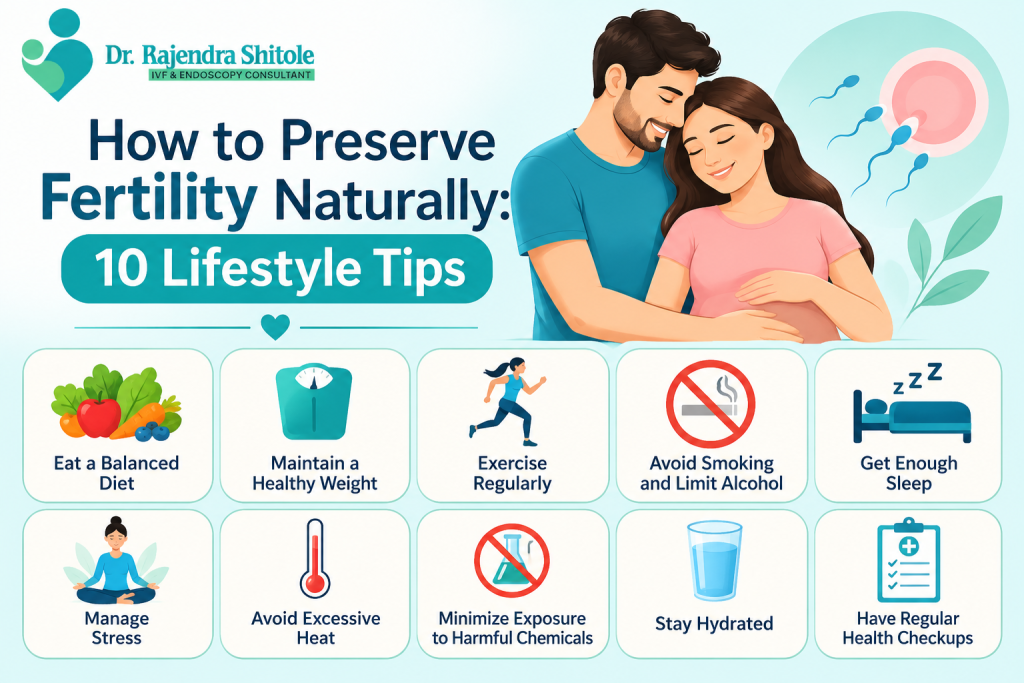
Fertility is influenced by several factors, including age, hormonal health, reproductive conditions and lifestyle habits. Many couples want to know how to preserve fertility naturally so they can maintain their reproductive health and plan a pregnancy in the future.
Although no natural method can stop the biological ageing of eggs or guarantee fertility, certain lifestyle changes may support reproductive health in both women and men. Eating a balanced diet, maintaining a healthy weight, exercising regularly, avoiding smoking and managing existing health conditions are important steps.
Dr. Rajendra Shitole, IVF Doctor in Pune and Fertility Specialist in Pune, helps individuals and couples understand fertility-related concerns and available fertility preservation options, including egg freezing, sperm banking and embryo freezing.
1. Follow a Balanced and Fertility-Friendly Diet
Nutrition plays an important role in overall reproductive health. A balanced diet provides essential vitamins, minerals, antioxidants and other nutrients involved in normal hormonal and reproductive functions.
Include the following foods in your daily diet:
- Green leafy vegetables: Spinach, broccoli and fenugreek provide folate and other essential nutrients.
- Fresh fruits: Berries, oranges, apples and pomegranates provide vitamins and antioxidants.
- Whole grains: Oats, brown rice and whole wheat provide fibre and energy.
- Healthy fats: Nuts, seeds, olive oil and other unsaturated fat sources support overall health.
- Protein-rich foods: Pulses, beans, eggs, fish and dairy products provide essential protein.
A balanced eating pattern may support metabolic and reproductive health. However, no specific food can guarantee improved egg quality or prevent age-related fertility decline.
2. Maintain a Healthy Body Weight
- Body weight can influence hormonal balance, ovulation and sperm health. Both being underweight and having excess body weight may affect reproductive functions.
- In women, excess body weight can contribute to insulin resistance and irregular ovulation, particularly in those with Polycystic Ovary Syndrome (PCOS).
- In men, obesity has been associated with changes in sperm count, motility and reproductive hormones.
- Maintaining a healthy weight through balanced nutrition and regular physical activity may support fertility. Individuals with significant weight changes or irregular menstrual cycles should consider a medical evaluation.
3. Exercise Regularly
Regular physical activity supports cardiovascular health, metabolic function and hormonal health. It can also help maintain a healthy body weight. Activities that can be included in a routine are:
- Walking for 30 minutes.
- Swimming.
- Cycling.
- Yoga.
- Moderate strength training.
- Light aerobic exercises.
Avoid excessive or intense exercise, particularly when accompanied by inadequate calorie intake, as this may interfere with menstrual cycles and ovulation in some women. The goal is to maintain a consistent and balanced exercise routine rather than follow an intense fitness programme.
4. Avoid Smoking and Limit Alcohol Consumption
Smoking can negatively affect reproductive health in both men and women. In women, smoking is associated with reduced ovarian function and earlier reproductive ageing. In men, tobacco use may affect sperm concentration, movement and quality. Heavy alcohol consumption can also affect reproductive hormones and sperm health.
Practical steps include:
- Avoid cigarettes and other tobacco products.
- Avoid recreational drugs.
- Limit or avoid alcohol, particularly when planning pregnancy.
- Seek professional support if stopping tobacco or alcohol use is difficult.
- These lifestyle changes support general health and may help reduce certain avoidable fertility risks.
5. Manage Stress and Prioritise Mental Well-Being
Long-term stress can affect sleep, eating habits, general well-being and hormonal regulation. Some individuals also experience changes in their menstrual cycles during periods of significant stress. Consider including simple stress-management activities in your daily routine:
- Practise meditation or breathing exercises.
- Maintain a regular sleep schedule.
- Spend time outdoors.
- Follow activities that help you relax.
- Seek emotional support when needed.
Stress management is beneficial for overall well-being, but it should not be considered a standalone fertility treatment.
6. Get Adequate Sleep
Sleep plays an important role in regulating several hormones involved in general health and reproductive function. Irregular sleep schedules, inadequate rest and long-term sleep disturbances can affect metabolic and hormonal health. To support healthy sleep habits:
- Aim for approximately 7–9 hours of sleep each night.
- Maintain consistent sleeping and waking times.
- Reduce screen exposure before bedtime.
- Avoid excessive caffeine late in the day.
- Keep your sleeping environment comfortable.
Good sleep habits support overall health, although they cannot reverse age-related changes in ovarian reserve.
7. Understand Your Menstrual Cycle and Ovulation
Understanding your menstrual cycle can help you recognise your reproductive patterns and identify possible irregularities. Ovulation is the process in which an ovary releases an egg. It generally occurs once during each menstrual cycle.
You can track your cycle by:
- Recording the first day of each menstrual period.
- Observing changes in cycle length.
- Using ovulation prediction kits when appropriate.
- Noting irregular bleeding or missed periods.
Irregular menstrual cycles, absent periods or significant changes in bleeding patterns may indicate an underlying condition such as PCOS or thyroid dysfunction. A medical consultation can help identify the cause.
8. Avoid Unnecessary Supplements and Self-Medication
Many fertility supplements are promoted for improving egg quality, ovarian reserve and reproductive health. However, scientific evidence supporting these claims varies. Taking high doses of vitamins, hormones or herbal products without medical advice may cause unwanted effects or interact with existing medications.
Before using fertility supplements:
- Discuss your nutritional requirements with a healthcare professional.
- Avoid taking multiple supplements without guidance.
- Correct confirmed nutritional deficiencies.
- Do not use hormonal medicines without a prescription.
Folic acid is recommended before pregnancy to reduce the risk of neural tube defects in the developing baby. It is not a treatment for low ovarian reserve or a method of preserving eggs.
9. Protect Yourself from Reproductive Health Conditions
Certain medical conditions can affect fertility if they are not identified and managed appropriately. These include:
- Polycystic Ovary Syndrome (PCOS).
- Endometriosis.
- Thyroid disorders.
- Sexually transmitted infections.
- Pelvic inflammatory disease.
- Uterine and ovarian conditions.
Regular medical consultations can help identify reproductive health concerns. Early evaluation is particularly important when there are persistent symptoms, irregular periods, pelvic pain or a history of reproductive infections. Men should also seek evaluation if they experience testicular problems, hormonal symptoms or concerns about sperm health.
10. Understand Age-Related Fertility Changes
- Age is one of the most important factors influencing fertility, particularly in women.
- Women are born with a finite number of eggs. Both the number and quality of eggs decrease over time, with a more noticeable decline in reproductive potential as age advances.
- In men, sperm production generally continues throughout life, but advancing age can also influence certain sperm parameters and reproductive outcomes.
- Healthy eating, exercise and other lifestyle habits may support reproductive health, but they cannot stop the natural decline in egg number and quality.
- If you are planning to delay parenthood, understanding age-related fertility changes and discussing your options with a fertility specialist can help you make informed decisions.
Can You Preserve Fertility Naturally Without Medical Treatment?
- Natural lifestyle changes can support reproductive health, but they cannot guarantee that fertility will remain unchanged over time.
- For women, there is currently no proven diet, exercise routine or supplement that can preserve the ovarian egg reserve or stop age-related egg quality decline.
- For men, healthy lifestyle habits may support sperm health, but they cannot guarantee normal sperm production or prevent every cause of male infertility.
- Individuals who want to preserve their reproductive options for the future may consider medical fertility preservation after an appropriate consultation.
Medical Fertility Preservation: Options to Consider
When lifestyle changes alone are not sufficient to address future fertility concerns, medical fertility preservation may be considered.
Egg Freezing
- Egg freezing, also known as oocyte cryopreservation, involves collecting mature eggs from the ovaries and storing them at very low temperatures for potential future use.
- It may be considered by women who want to delay pregnancy or are preparing for medical treatments that could affect ovarian function.
Sperm Freezing
- Sperm freezing, also called sperm cryopreservation, involves collecting and storing sperm for potential future fertility treatment.
- It may be considered by men who are undergoing chemotherapy, radiation or certain surgeries that could affect sperm production.
Embryo Freezing
- Embryo freezing involves fertilising collected eggs with sperm through IVF and storing the resulting embryos for possible future use.
- It may be considered by couples undergoing IVF who wish to preserve suitable embryos for another pregnancy attempt.
- The appropriate option depends on age, medical history, reproductive goals and individual fertility assessment.
When Should You Consult a Fertility Specialist?
Consider a fertility consultation if:
- You are planning to delay parenthood.
- You have irregular or absent menstrual periods.
- You have been diagnosed with PCOS or endometriosis.
- You have a family history of early menopause.
- You are preparing for chemotherapy or radiation treatment.
- You have concerns about ovarian reserve or sperm health.
- You want to understand egg freezing or sperm banking.
A fertility specialist may recommend investigations such as AMH testing, antral follicle count, hormone evaluation or semen analysis, depending on your medical history.
These tests can provide useful information, but no single test can accurately predict whether someone will achieve a natural pregnancy in the future.
Fertility Preservation Consultation in Pune
Preserving reproductive options requires understanding both lifestyle factors and available medical procedures. Healthy habits can support general reproductive health, while medical fertility preservation in pune may help protect reproductive material before certain treatments or when pregnancy is being delayed. Dr. Rajendra Shitole, IVF and Fertility Specialist in Pune, provides consultation for individuals and couples interested in understanding their fertility and preservation options.
At IRSA Fertility & IVF and Endoscopy Clinic, Kharadi, Pune, individuals can discuss options such as egg freezing, sperm banking and embryo cryopreservation based on their medical history and reproductive goals.
A personalised consultation can help you understand the available procedures, their limitations, potential benefits and realistic expectations.
Learn more: Fertility Preservation in Pune
Contact: 8208422881
Frequently Asked Questions
1. How to preserve fertility naturally?
Following a balanced diet, maintaining a healthy weight, exercising regularly, avoiding smoking, limiting alcohol and managing medical conditions can support reproductive health. However, these habits cannot stop age-related fertility decline or guarantee future pregnancy.
2. Which foods help improve fertility naturally?
Green leafy vegetables, fruits, whole grains, nuts, seeds, pulses and protein-rich foods provide nutrients that support overall health. No individual food has been proven to preserve ovarian reserve or guarantee improved fertility.
3. Can exercise improve fertility?
Moderate physical activity can support metabolic health, weight management and hormonal function. However, excessive exercise combined with inadequate nutrition may affect ovulation and menstrual cycles.
4. Can women preserve egg quality naturally?
There is no scientifically proven natural method to stop age-related changes in egg quality. Healthy lifestyle habits support general health, but egg quality is strongly influenced by age.
5. Does stress affect fertility?
Significant or prolonged stress may affect general well-being, sleep and reproductive health. Stress management can support overall health, but reducing stress alone cannot treat underlying infertility.
6. At what age should women consider egg freezing?
There is no single ideal age for everyone. Age, ovarian reserve, medical history and future pregnancy plans influence the decision. A fertility consultation can help women understand the potential benefits and limitations of egg freezing.
7. Can men preserve fertility naturally?
Men can support reproductive health by avoiding smoking, limiting alcohol, maintaining a healthy weight, eating a balanced diet and managing medical conditions. Sperm banking may be considered before treatments that could affect sperm production.
8. Does AMH testing show how long fertility will last?
AMH provides information about ovarian reserve and may help estimate how the ovaries could respond to stimulation. However, it cannot accurately predict the exact time of menopause or guarantee natural pregnancy.
Conclusion
Understanding how to preserve fertility naturally starts with making informed lifestyle choices and taking care of reproductive health. Balanced nutrition, regular exercise, adequate sleep, avoiding smoking and timely management of medical conditions can support overall well-being.
However, natural methods cannot stop biological ageing or guarantee future fertility. If you are planning to delay parenthood or have medical concerns that may affect reproductive health, discussing fertility preservation options with a specialist can help you plan ahead.
Consult Dr. Rajendra Shitole in Kharadi, Pune, to understand your fertility health and available preservation options.

Dr. Rajendra Shitole
Dr. Rajendra Shitole, Best IVF & Fertility Specialist Centre in Kharadi, Pune .He is highly skilled Gynaecologist, Fertility Consultant, and Laparoscopic & Robotic Surgeon with over 11 years of experience dedicated to women’s health and reproductive care. His mission is to help childless couples fulfill their dream of parenthood through compassionate care and advanced medical expertise.
He has successfully managed numerous complex cases of Infertility, Fibroids, PCOS, Adenomyosis, Endometriosis, and Male Factor Infertility.