KEY TAKEAWAYS IVF Treatment Monsoon PCMC
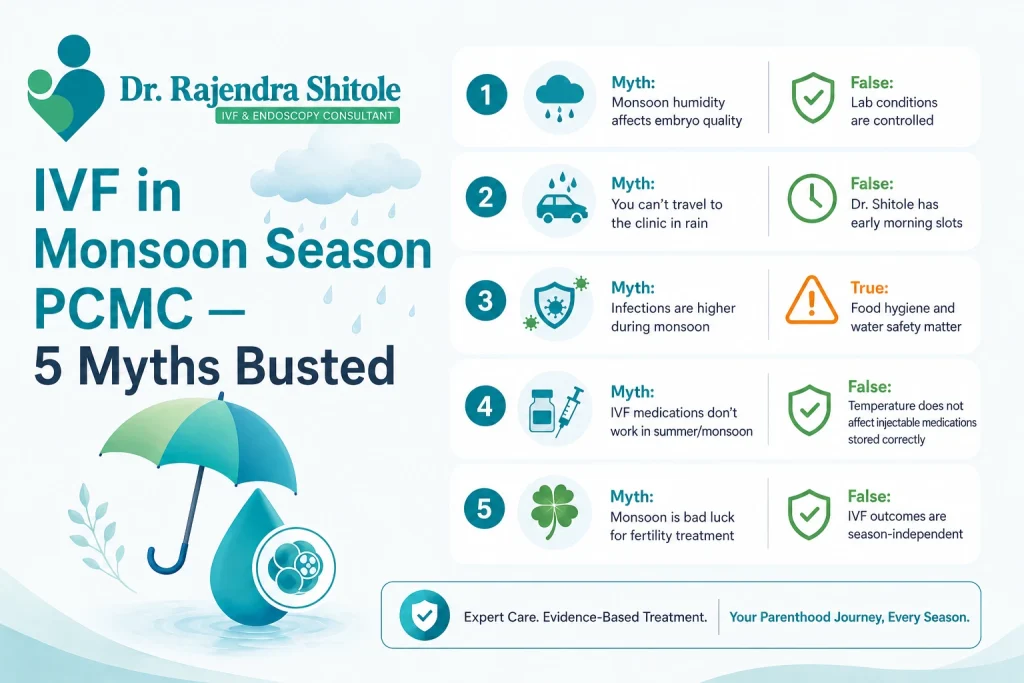
- IVF outcomes are not affected by season — embryology laboratory conditions are temperature-controlled and independent of external weather.
- Monsoon (June to September) is actually a preferred IVF season for many PCMC couples — cooler temperatures, less outdoor travel and more time indoors for rest.
- Infection risk during monsoon is real but manageable — food hygiene, clean water and avoiding crowded places are the key precautions during an IVF cycle.
- IVF medication storage is unaffected by monsoon humidity when medications are kept per package instructions — usually at room temperature or refrigerated.
- Monitoring visits at Dr. Shitole’s PCMC clinic continue through the monsoon season — early morning slots minimise travel disruption.
- Stress levels during IVF should be managed actively in monsoon — flooding, traffic and disrupted routines can affect cortisol and treatment adherence.
Can You Start IVF During Monsoon Season in PCMC?
IVF treatment during monsoon in PCMC is a question Dr. Shitole’s team answers every June as the rains approach. The short answer is yes — absolutely. IVF outcomes are driven by egg quality, sperm quality, embryo development and uterine receptivity — none of which are meaningfully affected by rainfall, humidity or seasonal temperature changes in PCMC.
The embryology laboratory at Dr. Shitole’s D.Y. Patil Hospital clinic is a climate-controlled, sterile environment operating at precise temperature and humidity levels year-round. The monsoon outside has no more impact on your embryos than a hot summer day or a cold winter morning.
In fact, monsoon months — July and August — are among the most active treatment months at Dr. Shitole’s PCMC clinic. Many IT professionals prefer starting IVF when outdoor activities are naturally reduced, clinic visits feel less disruptive to the day, and the cooler temperature makes resting post-transfer more comfortable.
QUICK FACTS IVF Treatment Mansoon PCMC
IVF lab temperature control: Maintained at 37 degrees Celsius year-round, independent of external weather
Most active IVF months at PCMC clinics: July to September (monsoon preference)
Monsoon infection risk for IVF patients: Manageable with basic hygiene precautions
Travel disruption: Manageable with early morning appointments and PCMC’s internal road network
Optimal post-transfer rest: Easier in monsoon — cooler, calmer at home
Psychological benefit of monsoon IVF: Reduced social obligations, more time for self-care
PCMC Monsoon and IVF — Practical Considerations 2025-2026
| Consideration | Monsoon Impact | Dr. Shitole’s Recommendation |
| Embryology laboratory | None — fully climate-controlled | No change to protocol |
| Medication storage | Keep refrigerated medications as advised, avoid heat | Follow package instructions strictly |
| Travel to clinic | Rain and traffic may cause delay | Book early morning slots (7 to 9 AM) |
| Infection risk | Slightly higher for waterborne illness | Boil or filter water, avoid street food during cycle |
| Dietary nutrition | Fresh monsoon vegetables are nutritious | Focus on warm, cooked, hygienic food |
| Stress management | Flooding, traffic and disruption can raise stress | Plan travel in advance, allow extra time |
| Post-transfer rest | Cooler and calmer — easier to rest at home | Take 1 to 2 days of relative rest as usual |
Does Monsoon Humidity Affect IVF Medications?
A common concern among PCMC couples is whether the June to September humidity damages fertility injections or oral medications. The answer is straightforward: when medications are stored correctly — injections in the refrigerator, oral medications in a cool dry place away from direct sunlight — monsoon humidity has no measurable effect on medication potency.
What to avoid: leaving injection pens or vials in a car during a hot monsoon day (temperatures in parked cars exceed 40 degrees), storing medications near a damp bathroom or kitchen sink, or allowing the needle tip of a pre-filled injection to be exposed to humid air before administration. Dr. Shitole’s nursing team walks every patient through medication storage and administration at the start of their cycle.
Monsoon Diet Tips for IVF Patients in PCMC
Monsoon brings specific dietary considerations for IVF patients in PCMC. The rainy season increases the risk of waterborne infections — gastroenteritis, typhoid, hepatitis A — which can disrupt an IVF cycle if they occur during stimulation or around the transfer window.
| Monsoon Food Principle | Fertility Benefit | PCMC Examples |
| Boil or filter all drinking water | Prevents waterborne infection during sensitive IVF phase | RO water or boiled water only |
| Eat freshly cooked warm food | Reduces bacterial contamination risk | Dal, sabzi, khichdi — freshly made |
| Avoid street food and raw salads | High contamination risk in monsoon | Skip chaat, pani puri and uncooked greens |
| Include immunity-supporting foods | Supports general health during treatment | Turmeric milk, ginger, garlic, amla juice |
| Seasonal vegetables — well cooked | Rich in antioxidants and micronutrients | Bhindi, dudhi, tinda — cooked not raw |
| Warm soups and lentil broths | Easy digestion, nutrient-dense | Masoor dal, moong soup, vegetable broth |
Managing Monsoon Stress During IVF in PCMC
PCMC’s monsoon brings real practical stress — waterlogged roads near Bhosari and Chinchwad industrial areas, traffic delays on the Pune-Mumbai expressway, power cuts in Nigdi and Akurdi, and disrupted work schedules for IT professionals in Hinjewadi. For couples in the middle of an IVF cycle, these disruptions can add to the anxiety that already accompanies treatment.
Practical stress management for monsoon IVF in PCMC: plan monitoring appointment travel 20 minutes earlier than usual to account for traffic, confirm your appointment by phone the morning of each scan, keep a printed copy of your medication schedule in case of phone battery issues, and identify a reliable auto or cab service for clinic visits.
Psychological stress during the two-week wait (post-transfer) is normal and universal. Dr. Shitole’s counselling team is available by WhatsApp between visits. Yoga, light indoor exercise and mindfulness practices — all easier to maintain during monsoon’s slower pace — have been shown to reduce cortisol and support implantation.
Why Monsoon Is Actually a Good Time for IVF in PCMC
Beyond the practical precautions, monsoon has genuine advantages for IVF patients in PCMC. The social calendar slows down — fewer weddings, festivals and outdoor commitments that require explaining an absence. It’s easier to rest at home post-transfer. The cooler temperatures support physical comfort during ovarian stimulation, when mild bloating is common.
Many PCMC couples in the IT sector start IVF in July or August because work schedules are often quieter during the non-peak quarter, making frequent morning clinic visits more manageable. The monsoon IVF myth — that rain brings bad luck to fertility treatment — is exactly that: a myth. Success rates at Dr. Shitole’s clinic show no seasonal variation.
IVF Scheduling in Monsoon — How It Works at Dr. Shitole’s PCMC Clinic
| IVF Phase | Duration | Monsoon Scheduling Tip |
| Initial consultation and tests | 1 to 2 weeks | Book on a clear morning — weekday preferred |
| Ovarian stimulation | 10 to 14 days | Early morning scan slots (7 to 9 AM) available |
| Egg retrieval | Day procedure | Arrange morning transport in advance |
| Embryo culture | 5 days in lab | No patient attendance needed — lab is climate-controlled |
| Embryo transfer | Day procedure, 20 minutes | Rest at home same day — ideal in cool monsoon weather |
| Two-week wait | 14 days | Easiest phase to manage at home in monsoon |
| Pregnancy test | Day procedure, 5 minutes | Morning appointment, quick visit |
Frequently Asked Questions
Q: Is it safe to start IVF during monsoon season in PCMC?
Yes. IVF outcomes are not affected by season — the embryology laboratory is fully climate-controlled and operates identically year-round. Monsoon is a popular and practical IVF season for PCMC couples. The main precautions are around infection prevention (food and water hygiene) and travel planning for clinic visits.
Q: Does rain affect embryo quality or IVF success rates?
No. Embryos develop in an incubator maintained at 37 degrees Celsius and controlled humidity — completely independent of external weather. IVF success rates at Dr. Shitole’s PCMC clinic show no seasonal variation between summer, monsoon and winter cycles.
Q: Can I get a monsoon-related infection during IVF stimulation?
The risk exists but is manageable. Avoid street food, raw salads and unfiltered water during your stimulation and transfer period. Stick to freshly cooked home food and boiled or filtered water. Wash hands before self-administering injections. If you develop fever, vomiting or diarrhoea during stimulation, contact Dr. Shitole’s clinic immediately — the cycle may need to be paused.
Q: What if I miss a monitoring appointment due to flooding in PCMC?
Contact Dr. Shitole’s clinic immediately by phone or WhatsApp if you cannot make a monitoring appointment. Depending on where you are in your stimulation, a one-day delay may be manageable or may require protocol adjustment. Never miss a scan without informing the clinic — follicle growth timing is critical.
Q: Should I take extra precautions with IVF injections in monsoon?
Store refrigerated injections in the fridge at all times. Bring them to room temperature for 15 minutes before administration. Never leave injections in a vehicle. Keep the needle cap on until the moment of injection. Monsoon humidity does not degrade correctly stored fertility medications.
Q: Is post-transfer rest harder or easier in monsoon?
Easier for most PCMC patients. The cooler monsoon temperatures make lying down and resting at home comfortable. Social obligations naturally reduce. The main risk is stress from practical disruptions — plan transport, keep medication routine consistent and take the two-week wait one day at a time.
Conclusion
IVF treatment during monsoon in PCMC is not just safe — for many couples, it’s the best season to start. The embryology lab is unaffected by weather, the cooler temperatures support recovery, and the reduced social calendar makes the two-week wait easier to manage.
With simple food hygiene precautions and early morning appointment scheduling, monsoon IVF at Dr. Shitole’s clinic at D.Y. Patil Hospital, Pimpri-Chinchwad proceeds as effectively as any other time of year.
Don’t let the rain delay your decision. Book your IVF consultation today
Monsoon is the perfect time to start your IVF cycle — comfortable, private and effective. Dr. Shitole’s team is ready, rain or shine.
MEDICAL DISCLAIMER: This content is for informational and educational purposes only. IVF treatment decisions must be made with a qualified fertility specialist. Dr. Rajendra Shitole’s clinic: D.Y. Patil Hospital, Pimpri-Chinchwad, PCMC.

Dr. Rajendra Shitole
Dr. Rajendra Shitole, Best IVF & Fertility Specialist Centre in Kharadi, Pune .He is highly skilled Gynaecologist, Fertility Consultant, and Laparoscopic & Robotic Surgeon with over 11 years of experience dedicated to women’s health and reproductive care. His mission is to help childless couples fulfill their dream of parenthood through compassionate care and advanced medical expertise.
He has successfully managed numerous complex cases of Infertility, Fibroids, PCOS, Adenomyosis, Endometriosis, and Male Factor Infertility.